
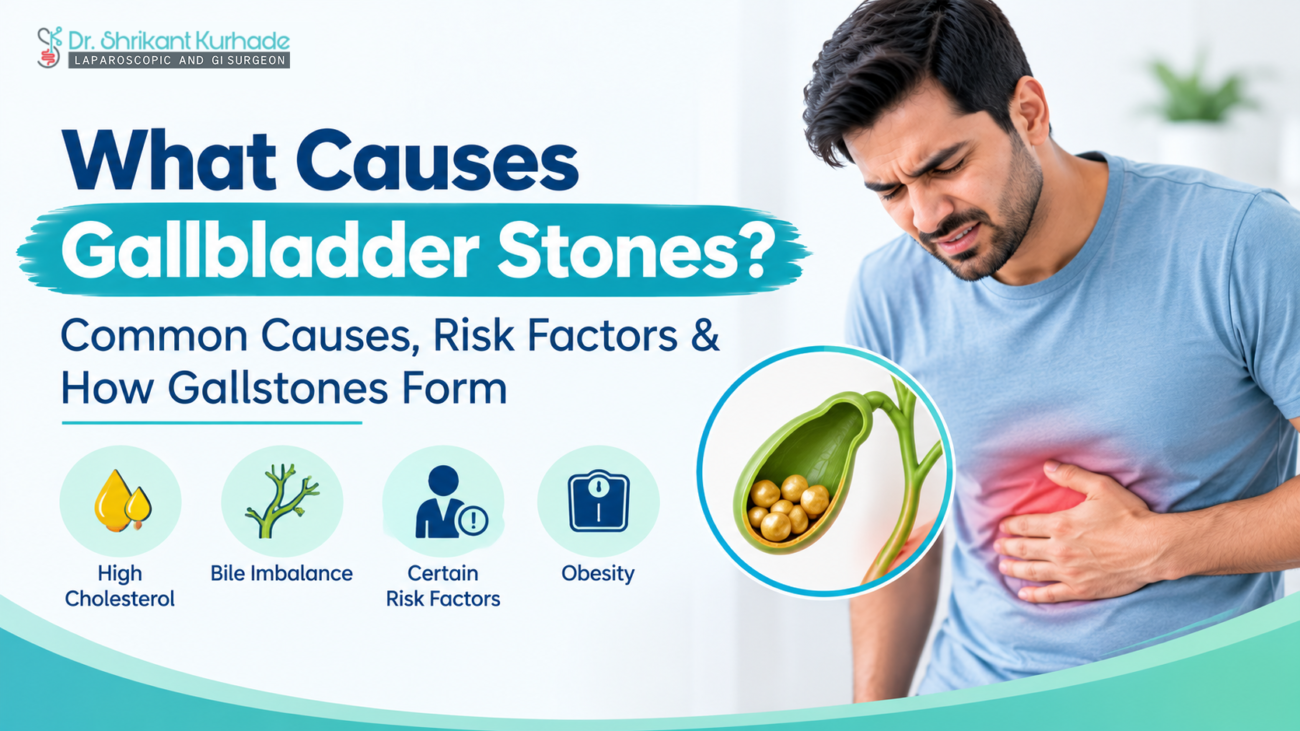
Many people find out they have gallbladder stones by chance, during an ultrasound done for something else. Others find out through a sharp pain under the right ribs a few hours after a heavy meal. Either way, the first question is usually: why did this happen to me?
There is no single answer. The causes of gallbladder stones come down to what is in your bile, how well your gallbladder empties, and a mix of hormones, weight, diet, age and family history. This guide explains the causes of gallstones in plain language, shows how gallstones are formed in the gallbladder, and lists the signs that mean you should see a doctor.
What Is a Gallbladder Stone?
A gallbladder stone is a hard lump that forms inside the gallbladder from substances in bile. Doctors call the condition cholelithiasis.
The gallbladder is a small, pear-shaped pouch under the liver, on the right side of the upper belly. The liver makes bile all day. The gallbladder stores it, concentrates it, and squeezes it into the intestine when you eat, so your body can digest fat.
Bile carries cholesterol, bile salts, a yellow pigment called bilirubin, and fatty substances called phospholipids. When these stay in balance, bile stays liquid. When the balance tips, part of it turns solid and becomes a stone.
Stones can be as small as a grain of sand or as big as a golf ball. Many people carry them for years without any symptoms, which is why they are often called “silent stones.”
How Are Gallstones Formed in the Gallbladder?
To understand how gallstones are formed in the gallbladder, picture a slow build-up over months or years, in three steps.
- Bile gets overloaded
Bile salts and phospholipids work a bit like washing-up liquid, keeping cholesterol dissolved. If the liver sends out more cholesterol than they can hold, the bile becomes overloaded. The same can happen with bilirubin.
- Tiny crystals appear
Overloaded bile starts dropping tiny crystals, like sugar settling at the bottom of very sweet tea. These crystals mix with mucus to form a thick, muddy layer called gallbladder sludge. Sludge often shows up on ultrasound before any stone does.
- The crystals grow into stones
A gallbladder that empties well flushes most sludge out with each meal. One that empties slowly lets it sit. Over time, the crystals stick together and harden into stones.
Why Are Stones Formed in the Gallbladder and Not Elsewhere?
The gallbladder removes water from bile to make it stronger, so its bile is far more concentrated than anywhere else in the body. Concentrated bile sitting still is exactly what crystals need. That is why stones are formed in the gallbladder far more often than in the bile ducts or liver.
Types of Gallstones
Not all gallstones are made of the same thing, and the type gives a clue to what caused it.
| Type | What it is made of | How it looks | What usually causes it |
| Cholesterol stones | Mostly hardened cholesterol | Yellow or yellow-green, smooth | Too much cholesterol in bile, too few bile salts, or a slow-emptying gallbladder |
| Pigment stones (black or brown) | Mostly bilirubin and calcium | Small, dark, irregular | High bilirubin from red blood cell breakdown, liver disease, or bile duct infection |
| Mixed stones | Cholesterol plus pigment | Varied shapes and sizes | A mix of the causes above |
Cholesterol and mixed stones make up most cases. In India, gallstones are more common in the north, where cholesterol stones dominate, while pigment stones are seen more often in the south. [Add a citation link to an ICMR or PubMed study here.
Causes of Gallbladder Stones
Almost every cause of gallstones in the gallbladder falls into one of four groups.
1. Too much cholesterol in bile. This is the most common of all the causes of gallstones. When the liver releases more cholesterol than bile salts can dissolve, the extra hardens into crystals. Excess weight, a fried and refined diet, diabetes and oestrogen all push the liver to do this.
2. Too few bile salts. Without enough bile salts, cholesterol crystallises even at normal levels. This happens when the lower small intestine, where bile salts are reabsorbed, is diseased (as in Crohn’s disease) or has been surgically removed.
3. Too much bilirubin. Conditions that destroy red blood cells quickly, such as thalassaemia and sickle cell disease, flood bile with bilirubin. Liver cirrhosis and bile duct infections do the same. The result is pigment stones.
4. A gallbladder that doesn’t empty well. Bile that sits too long thickens, and sludge has time to harden. Pregnancy, long gaps between meals, crash diets, long-term IV feeding and some medicines slow emptying. These medicines include birth control pills, hormone replacement therapy and certain cholesterol-lowering drugs.
Most people with gallstones have more than one of these at once.
Risk Factors That Raise Your Chances of Gallstones
A cause explains what happens inside the bile. A risk factor explains who is more likely to get stones. Doctors often sum up the classic profile as the “4 Fs”: female, forty, fertile and fat. Each part of that phrase points to a real risk.
- Being a woman: Women are about twice as likely as men to get gallstones. Oestrogen raises cholesterol in bile, and progesterone slows the gallbladder.
- Age over 40: Risk climbs steadily after 40, as bile holds more cholesterol with age.
- Pregnancy and hormones: Each pregnancy raises the risk. So do birth control pills and hormone therapy.
- Excess weight, especially around the belly: Extra weight makes the liver release more cholesterol into bile.
- Losing weight too fast: Losing more than about 1.5 kg a week, or having weight-loss surgery, can trigger stones within months.
- Family history: If a parent or sibling had gallstones, your own risk is higher.
- Diabetes and high triglycerides: Insulin resistance changes bile chemistry and slows emptying.
- Sitting most of the day: Low physical activity is linked to higher gallstone risk.
- Blood and liver conditions: Thalassaemia, sickle cell disease and cirrhosis raise the risk of pigment stones.
Symptoms of Gallbladder Stones and When to See a Doctor
Most gallstones in the gallbladder cause no symptoms. Trouble starts when a stone blocks the gallbladder’s outlet. The typical result is an attack called biliary colic:
- Steady, severe pain in the upper-right or upper-middle belly
- Pain that starts 30 minutes to a few hours after a heavy or oily meal, often at night
- Pain that spreads to the back or right shoulder and lasts from 30 minutes to several hours
- Nausea, vomiting, bloating or indigestion with the pain
When to See a Doctor
See a doctor soon if you have had even one attack of this kind of pain. Go to emergency care right away if you notice:
- Pain lasting more than 5–6 hours
- Fever with chills
- Yellowing of the skin or eyes (jaundice)
- Dark urine or pale, clay-coloured stools
- Repeated vomiting
These signs can mean a stone is causing infection or a blockage.
Complications of Untreated Gallstones
Silent stones may never cause harm. Once stones start causing pain, however, they can lead to:
- Acute cholecystitis: an inflamed, infected gallbladder
- Bile duct stones (choledocholithiasis): a stone slips out and blocks the main bile duct, causing jaundice
- Cholangitis: a serious infection of the bile ducts
- Gallstone pancreatitis: a stone blocks the pancreas outlet, causing severe belly pain
Long-standing gallstones are also linked to a higher risk of gallbladder cancer, a concern especially relevant in north India.
Why: It answers the reader’s next question and gives you internal-link opportunities to treatment pages.
Can You Lower Your Risk of Gallstones?
You can’t change your age, gender or genes, but you can change several of the causes of gallstones:
- Lose weight slowly, about 0.5–1 kg a week, if you need to
- Eat regular meals and don’t skip breakfast
- Add fibre through vegetables, fruit, dal and whole grains
- Cut down on fried food, sweets and refined flour
- Move for at least 30 minutes on most days
- Drink enough water through the day
Conclusion
The causes of gallbladder stones are rarely just one thing. They come from a mix of bile chemistry, hormones, genes and habits. Knowing how gallstones are formed in the gallbladder helps you see which risks are in your hands: steady weight, regular meals, more fibre, less fried food and daily movement.
Considering Best Gallbladder Surgeon In Pune ? Consult Dr. Shrikant Kurhade at KKCare Clinic for an evaluation and personalised treatment plan. Book an appointment today
H2: Frequently Asked Questions
What are the causes of cholelithiasis?
The main causes of cholelithiasis are too much cholesterol in bile, too few bile salts, too much bilirubin, and a gallbladder that doesn’t empty well. Being a woman, over 40, overweight, diabetic or pregnant raises the risk.
What is a gallbladder stone made of?
Most are hardened cholesterol. Pigment stones are bilirubin and calcium, and many stones are a mix.
Why are stones formed in the gallbladder after eating oily food?
One oily meal doesn’t create a stone. Years of fried, refined food raise cholesterol in bile, and that is why stones are formed in the gallbladder over time. A fatty meal mostly triggers pain from stones already there.
Can gallstones go away on their own?
Sludge can clear by itself, especially after pregnancy. Hard stones rarely dissolve without treatment.
Does fasting cause gallstones?
Overnight fasting is fine. Regularly skipping meals or fasting for long stretches lets bile thicken, which can lead to stones.