
Introduction
Pain bleeding or discomfort during bowel movements can indicate piles or an anal fissure. Although these conditions share similar symptoms their causes and treatments differ. Understanding the difference between piles and fissures can help you recognise warning signs and seek appropriate medical care.
What Is the Difference Between Piles and Fissure?
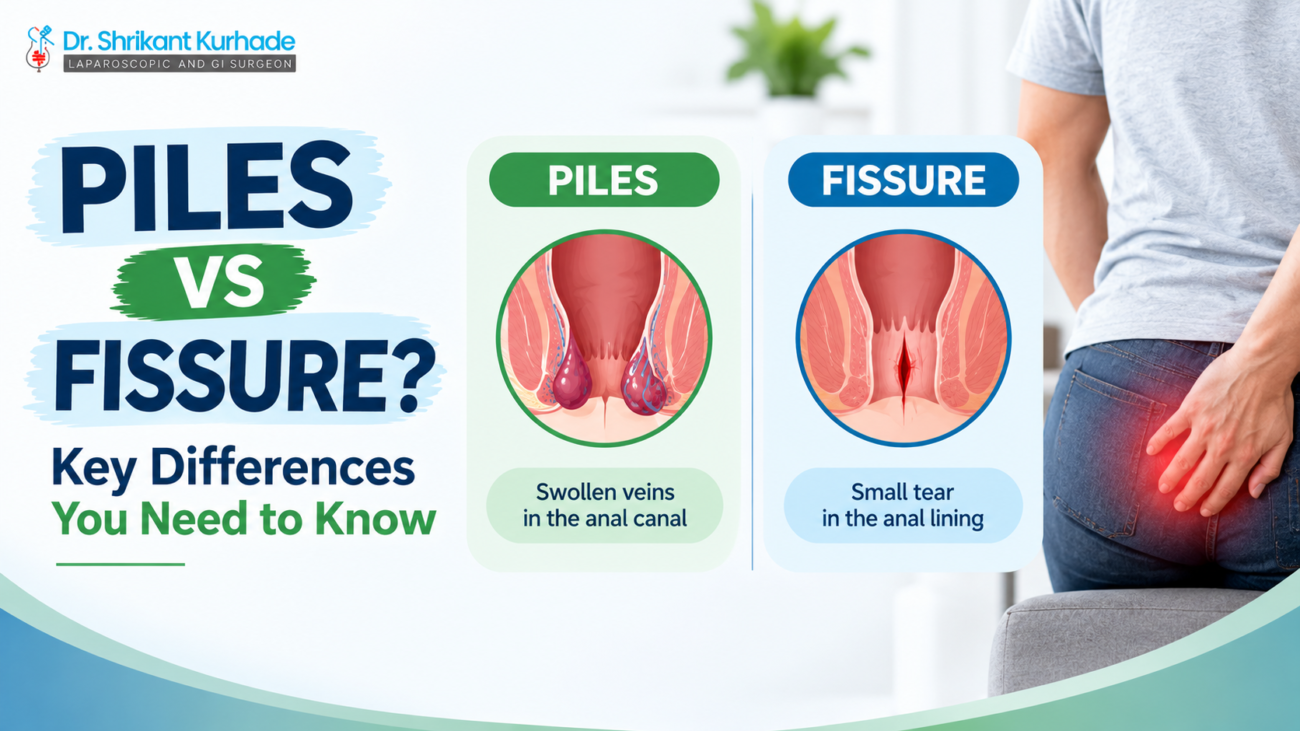
The main difference between piles and fissure is that piles are swollen blood vessels in or around the anus while an anal fissure is a small tear in the anal lining. Piles may cause bleeding, itching or lumps whereas fissures typically cause sharp pain during and after bowel movements.
What Are Piles and Anal Fissures? A Quick Overview
What Are Piles?
Piles medically known as haemorrhoids are swollen blood vessels inside the rectum or around the anus. They commonly develop due to constipation, straining prolonged toilet sitting or increased pressure during pregnancy.
There are two main types:
- Internal piles: Develop inside the rectum and may cause painless bleeding or protruding tissue.
- External piles: Develop around the anus and may cause itching, swelling discomfort or painful lumps.
What Is an Anal Fissure?
An anal fissure is a small tear in the lining of the anal canal. It commonly occurs when hard stools stretch the anal lining although frequent diarrhoea and local irritation can also contribute.
Typical symptoms include sharp pain during bowel movements burning afterward and small amounts of bright-red blood. Persistent fissures may require prescription medication or further treatment.
What Is the Difference Between Piles and Fissure?
The difference between fissure and piles mainly concerns the affected tissue and symptoms. Piles involve swollen blood vessels while a fissure is a tear in the anal lining.
Internal piles often cause painless bleeding whereas fissures usually cause sharp pain during and after passing stools. However painful piles and other anorectal conditions can produce similar symptoms so an examination may be necessary.
What Are the Common Symptoms of Piles?
Common piles vs fissure symptoms associated with piles include:
- Bright-red bleeding during bowel movements.
- Itching or irritation around the anus.
- Swelling or a lump near the anal opening.
- Discomfort while sitting especially with external piles.
- Protruding tissue in some cases.
What Are the Common Symptoms of an Anal Fissure?
An anal fissure commonly causes:
- Sharp or cutting pain during bowel movements.
- Burning or aching that continues afterward.
- Small amounts of bright-red blood on toilet paper.
- Anal muscle tightness or spasms.
- Fear of passing stools because of pain.
Fissure vs Piles: Key Differences Explained
When comparing piles vs fissure the pattern of pain and bleeding can provide useful clues although symptoms alone cannot confirm a diagnosis.
| Feature | Piles | Anal fissure |
| Condition | Swollen blood vessels | Tear in the anal lining |
| Common causes | Constipation straining increased pressure | Hard stools constipation diarrhoea |
| Pain | Often painless with internal piles | Sharp pain during and after stools |
| Bleeding | May occur without pain | Often accompanied by pain |
| Lump | May develop around the anus | Usually absent though chronic fissures may develop a skin tag |
| Treatment | Lifestyle changes medication procedures or surgery | Stool-softening measures medication or surgery when needed |
Anal Fissure vs Piles: Which Symptoms Matter?
The difference between anal fissure and piles may be suggested by your symptoms. Sharp pain during bowel movements may indicate a fissure while painless bleeding or a lump may suggest piles.
However these signs overlap. Persistent bleeding, severe pain or recurring symptoms should be evaluated by a qualified medical professional.
How Can You Tell If You Have Piles or an Anal Fissure?
You cannot reliably distinguish between these conditions through symptoms alone. A painful bowel movement may suggest a fissure while painless bleeding may occur with internal piles.
If you experience recurring discomfort or bleeding, consulting a Piles Specialist in Pune can be a useful starting point for assessment.
How Are These Conditions Diagnosed?
Diagnosis generally involves reviewing symptoms, medical history and bowel habits. A doctor may examine the anal area and recommend a digital rectal examination or anoscopy when appropriate.
If pain is severe the examination may need to be modified. Additional investigations may be recommended when bleeding or other symptoms suggest an alternative cause.
Treatment Options for Piles and Anal Fissures
Piles Treatment
Mild piles may improve with increased fibre intake, adequate hydration and avoiding straining. Doctor-recommended medication can help relieve symptoms. Persistent or severe cases may require procedures such as rubber band ligation or surgery.
Anal Fissure Treatment
Treatment focuses on keeping stools soft and reducing discomfort. Warm sitz baths fibre adequate fluids and prescribed topical medication may help healing. Chronic fissures that do not respond to conservative treatment may require further procedures or surgery.
The appropriate treatment depends on the diagnosis severity and individual medical history.
Can These Conditions Be Prevented?
Although prevention is not always possible, healthy bowel habits may reduce the risk of piles and fissures.
- Eat fibre-rich foods including fruits, vegetables and whole grains.
- Drink adequate water unless medically restricted.
- Avoid straining or sitting on the toilet for prolonged periods.
- Stay physically active and respond to the urge to pass stools.
- Seek advice for persistent constipation or diarrhoea.
These measures support bowel health but do not replace medical assessment when symptoms persist.
Piles and Fissure Treatment: When Should You See a Doctor?
Consult a doctor if bleeding recurs pain persists a lump becomes increasingly painful or symptoms do not improve with home care.
Seek urgent medical attention for heavy bleeding, dizziness black stools, severe worsening pain or anal pain accompanied by fever or pus.
A Piles Doctor in Pimpri Chinchwad can help assess persistent symptoms and determine the next steps based on the findings.
Home Care and Lifestyle Changes
Warm sitz baths for 10–15 minutes may ease discomfort. Gentle hygiene, fibre-rich meals, adequate hydration and avoiding straining can also help.
Avoid prolonged use of creams or laxatives without medical guidance. Home care may relieve symptoms but persistent bleeding or severe pain requires evaluation.
Get the Right Diagnosis and Treatment for Piles and Fissures at KKcare Hospital
Understanding the difference between piles and fissure is important because each condition may require a different treatment approach. Persistent anal pain or bleeding should not be ignored or automatically attributed to piles.
At KKcare Hospital medical evaluation can help identify the cause of symptoms and determine suitable treatment. Depending on the diagnosis a GI surgeon in Pune may assess whether medication, a minimally invasive procedure or surgery is appropriate.
FAQs
1. Can piles and fissures heal on their own?
Yes mild piles and acute fissures may improve with fibre hydration and appropriate home care. Persistent or recurring symptoms may require medical treatment.
2. Can piles and fissures occur at the same time?
Yes both conditions can occur together particularly in people experiencing constipation or straining. A clinical examination can help identify each condition.
3. When should you consult a doctor for piles or fissures?
Consult a doctor for recurring bleeding, persistent pain or symptoms that do not improve. Heavy bleeding, dizziness or severe pain requires urgent medical attention.
4. What are the treatment options for piles and fissures?
Piles may require lifestyle changes, medication procedures or surgery. Fissures may respond to stool-softening measures and prescribed medication with surgery reserved for selected persistent cases.
5. Fissure vs piles: Which is more dangerous?
Neither is automatically more dangerous than the other. Persistent bleeding, severe pain or unusual symptoms need medical assessment to rule out other conditions.