
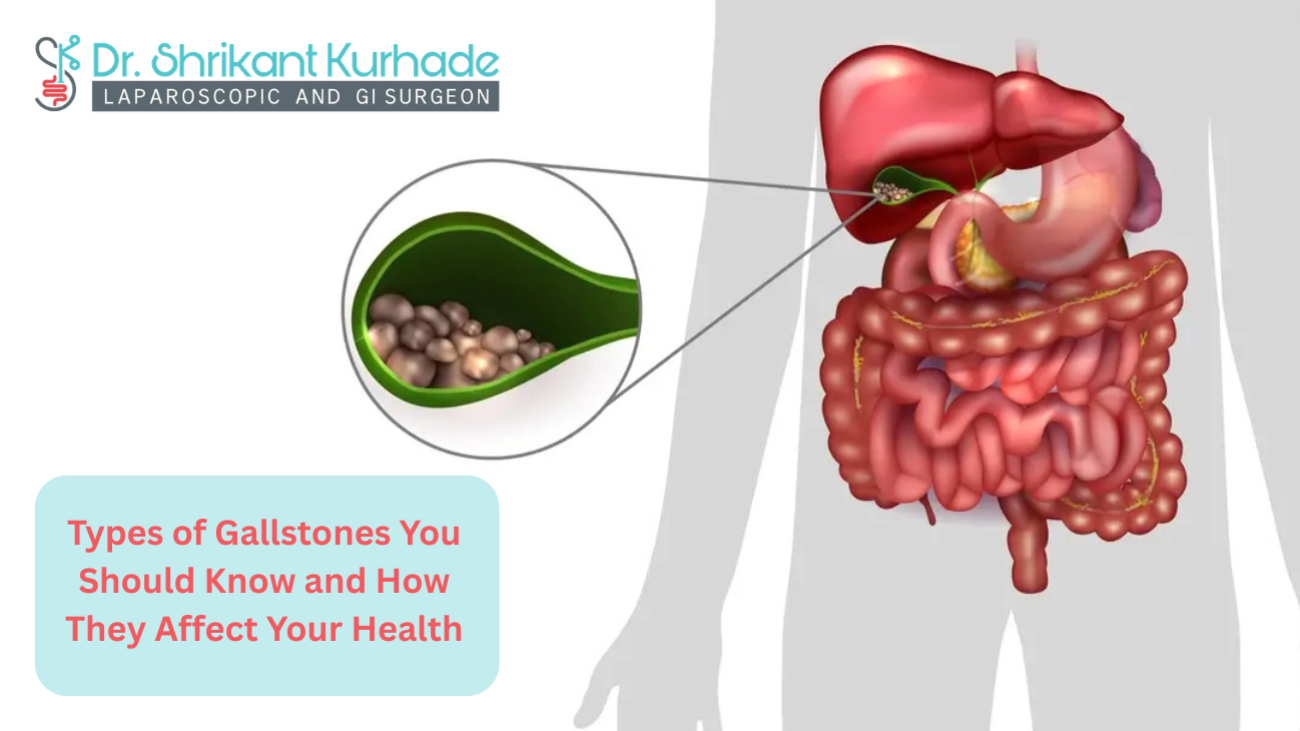
Gallstones are more common than most people think and many don’t even realize they have them until symptoms begin. If you’ve experienced sudden abdominal pain, bloating after meals, or nausea, your gallbladder could be the reason.
Understanding the types of gallstones is important because each type forms differently, affects the body in unique ways, and may require a specific treatment approach. This guide breaks down everything in a simple, easy-to-understand way.
What Are Gallstones and Why Do They Form?
Gallstones are hardened deposits that form in the gallbladder, a small organ located under the liver. The gallbladder stores bile, a digestive fluid that helps break down fats.
When there is an imbalance in the substances that make up bile, like cholesterol or bilirubin these particles can solidify and form stones.
Common Causes of Gallstones:
- Excess cholesterol in bile
- Poor gallbladder emptying
- Liver conditions affecting bile composition
- Infections in the bile duct
- Obesity or rapid weight loss
In medical terms, these conditions fall under types of cholelithiasis, which simply means different forms of gallstone disease based on how and why the stones develop.
What Are the 4 Types of Gallstones?
There are 4 types of gallstones, each with distinct characteristics. Knowing these helps in identifying the right treatment and preventing complications.
1. Cholesterol Gallstones
Cholesterol gallstones are the most common among the different types of gallstones. They form when there is too much cholesterol in the bile and not enough substances to dissolve it. These stones are usually yellowish in color and are often linked to factors like obesity, poor diet, and hormonal changes.
Causes:
- High cholesterol levels in bile
- Obesity or sedentary lifestyle
- Hormonal changes (common in women)
Risk Group:
- Adults over 40
- Women
- People with obesity or diabetes
2. Black Pigment Gallstones
Black pigment gallstones are small, dark stones made mainly of bilirubin. They are commonly seen in people with liver disease or certain blood disorders. Among the types of gallstones, these tend to be harder and more brittle, and they usually form when there is excess breakdown of red blood cells.
Associated Conditions:
- Liver diseases
- Blood disorders like anemia
- Cirrhosis
3. Brown Pigment Gallstones
Brown pigment gallstones are softer and are typically associated with infections in the bile ducts. These stones form when bacteria affect bile composition, leading to stone formation. Compared to other types of gall stones, brown stones are more common in people with biliary infections or inflammation.
Linked To:
- Bacterial infections
- Bile duct issues
- Parasitic infections
4. Mixed Gallstones
Mixed gallstones are a combination of cholesterol and pigment components, making them one of the more complex gallstones types. They may develop due to multiple factors like diet, infection, and bile imbalance. In many cases, patients may have mixed stones without clear symptoms until complications arise.
Linked To:
- Increasingly common due to mixed lifestyle and dietary habits
- Can be more complex to diagnose and manage
Types of Gallbladder Stones and Their Symptoms
Even though the types of gall stones vary, the symptoms can overlap. However, the intensity and triggers may differ:
- Sudden Pain in the Upper Abdomen
A sharp pain (often called a gallbladder attack) typically occurs after eating fatty meals. - Pain Radiating to the Back or Right Shoulder
Common across most types of gallstones, especially when a stone blocks a bile duct. - Nausea and Vomiting
Frequently seen with cholesterol and mixed stones. - Bloating and Indigestion
Mild but persistent symptoms that people often ignore. - Fever and Chills
More common in pigment stones if infection is present. - Jaundice (Yellowing of Skin and Eyes)
Occurs when stones block bile flow, seen in more severe cases.
How Different Types of Gallstones Affect Your Health
Not all gallstones types behave the same way. Some may remain harmless, while others can lead to serious complications if untreated.
Possible Complications:
- Cholecystitis (Inflammation of the gallbladder)
- Bile duct blockage
- Pancreatitis (inflammation of the pancreas)
- Infections in the biliary system
The risk of complications depends on the type of gall stones, their size, and their location. That’s why early diagnosis and proper evaluation are essential.
Consult a Gallbladder Surgeon in Pune for the Right Treatment
If you’re experiencing symptoms of gallstones or have been diagnosed with any of the types of gallstones, getting the right medical guidance is essential. Early diagnosis can help prevent complications and ensure faster recovery.
Dr. Shrikant Kurhade is a highly experienced Gallbladder Surgeon in Pune, specializing in advanced and minimally invasive procedures for gallbladder stone treatment in Pune. With expertise in laparoscopic and robotic surgery, he focuses on safe, effective, and quicker recovery solutions tailored to each patient.
FAQs
What are the 4 types of gallstones?
The 4 types of gallstones are cholesterol gallstones, black pigment gallstones, brown pigment gallstones, and mixed gallstones.
Which are the most common types of gallstones?
Cholesterol gallstones are the most common types of gallstones, accounting for the majority of cases.
How are different types of gallstones diagnosed?
Doctors use imaging tests like ultrasound, CT scans, or MRCP to identify the types of gallstones and their location.
What is the difference between cholesterol and pigment gallstones?
Cholesterol gallstones are made mainly of hardened cholesterol, while pigment gallstones are formed due to excess bilirubin, often linked to liver or blood-related conditions.