
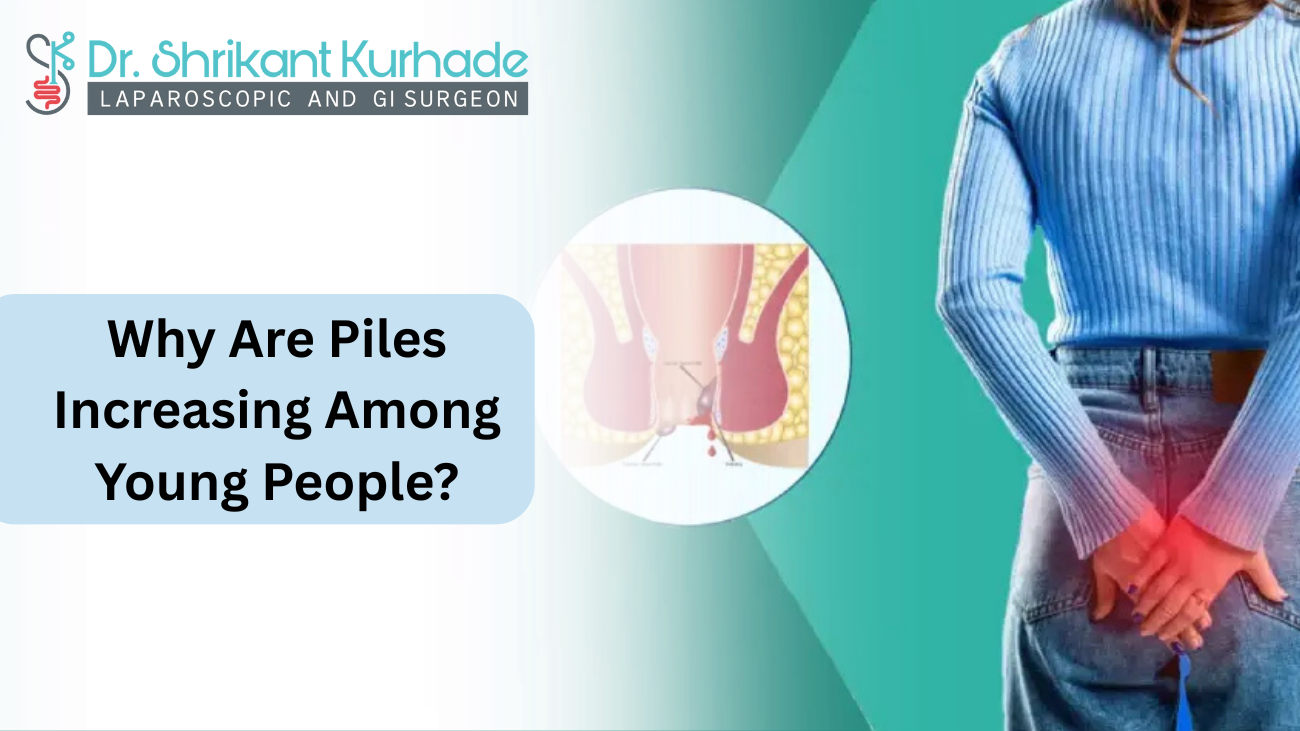
Piles, also known as haemorrhoids, were once considered a problem commonly affecting middle-aged and older adults. However, in recent years, there has been a noticeable rise in the number of younger patients, even children reporting severe piles of symptoms. As a surgeon with over 20 years of experience in treating piles, I have observed a steady increase in young individuals coming with complaints of pain, bleeding, and difficulty in passing stools. This clearly shows that piles in young people is becoming a growing health concern.
Why is the younger generation suffering from piles?
Piles problem is common and patients come to piles specialists with pain while passing stools and bleeding. With my surgical experience of the last 20 years, since 2005 when I entered my surgical residency training, I have diagnosed and treated many patients. But in the last 7 to 8 years I am getting more and more younger patients with severe pain and bleeding. I had to operate on children as young as 10 years for intractable piles problems which failed to solve with the conservative treatment. This shows that piles problem in child patients is also on the rise.
Why is this younger generation becoming more prone to piles or haemorrhoids?
Change in lifestyle is a major cause and concern for this. Lifestyle changes in food patterns, sleeping habits, less exercise and reduced water intake is at the source. Young people are consuming more junk food with high calories and low fiber content. Irregular time of eating also causes irregular bowel habits. Late night outs, drinking and less water intakes makes the stool harder and the individual has to strain for passing motion. Straining is the cause of fissure and piles. This explains what causes hemorrhoids in young adults and why we see more cases of piles in young adults today.
Can the Use of Mobiles in Toilets Increase Piles ?
Many experts suggest that excessive use of mobiles is one of the main reasons behind the rising cases of piles in young age. When young people use mobiles in the toilet, they tend to sit for a longer time while straining. This prolonged pressure often leads to mucosal prolapse of the anorectal region, ultimately causing piles.
Does Lack of Fiber and Less Water Cause Piles in Young People?
Less fiber and inadequate water intake make stools harder, forcing a person to strain during bowel movements. This pressure can lead to fissures and piles, including cases of piles in teenagers. That’s why the younger generation needs to be more careful about their diet and lifestyle habits to reduce the risk and avoid suffering from piles.
Conclusion:
The rising incidence of piles among the younger generation is not just a medical concern but also a reflection of changing lifestyles. Irregular eating habits, lack of exercise, reduced water intake, and excessive time spent on mobile phones even in toilets are significant contributors. The good news is that piles can often be prevented with simple yet consistent lifestyle changes. A fiber-rich diet, adequate hydration, regular physical activity, and mindful toilet habits can greatly reduce the risk.
If symptoms persist, early consultation with a piles specialist can prevent complications and ensure timely treatment. You can also consult a piles doctor in Pimpri Chinchwad if you’re seeking expert evaluation nearby. Dr. Shrikant Kurhade and the team at KK Care Clinic provide thorough assessment and individualized care management plans tailored to help you manage piles effectively.