
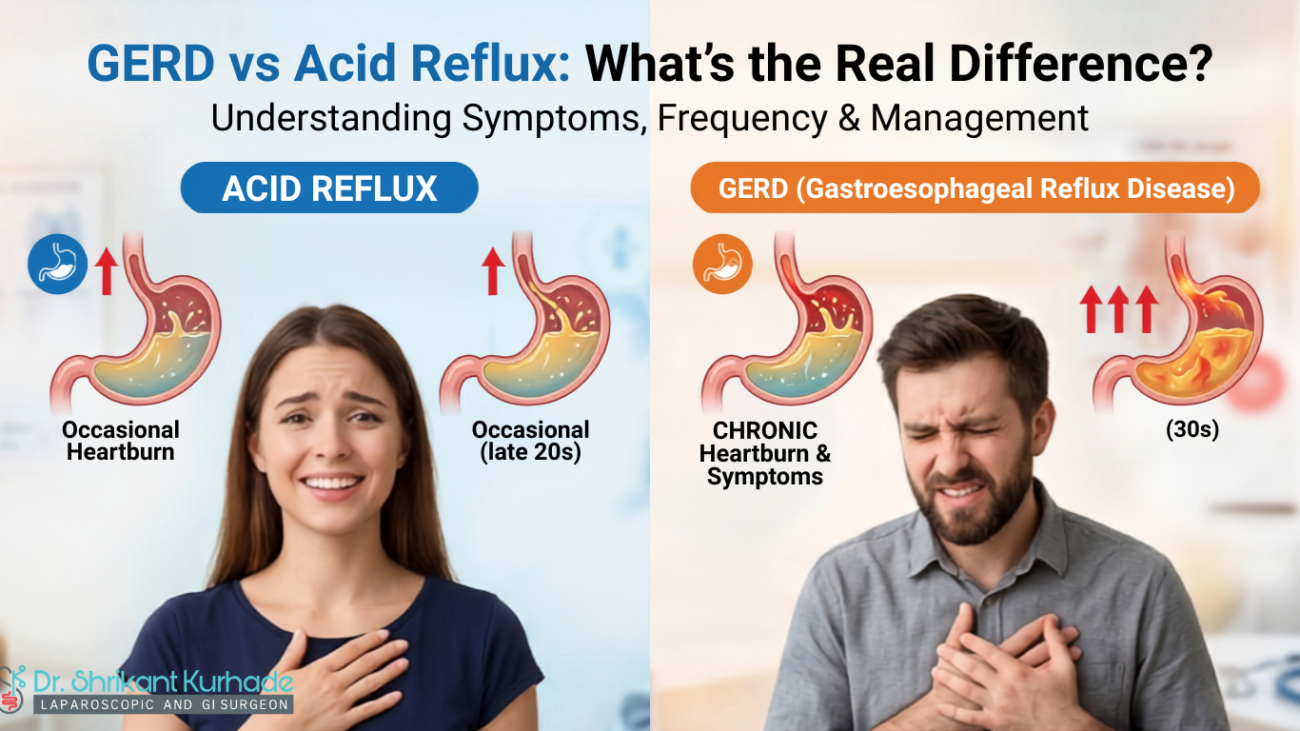
Most people use the terms acid reflux, heartburn, and GERD interchangeably, but they don’t all mean the same thing. Understanding the gerd vs acid reflux distinction can help you figure out whether what you’re experiencing is a normal, occasional discomfort or a sign of something that needs medical attention.
This guide breaks down the differences clearly, with insights from Dr. Shrikant Kurhade, a acidity treatment specialist and robotic surgeon in Pune with expertise in Nissen fundoplication surgery for patients whose GERD doesn’t respond to medication or lifestyle changes alone.
What Is Acid Reflux?
Acid reflux happens when stomach acid flows backward into the esophagus, the tube connecting your throat to your stomach. This usually occurs when the lower esophageal sphincter, a muscle that acts like a valve, weakens or relaxes at the wrong time. Almost everyone experiences acid reflux occasionally, often after a heavy meal, spicy food, or lying down too soon after eating.
What Does Acid Reflux Feel Like?
If you’ve never had it explained clearly, what does acid reflux feel like is one of the most common questions people search before they even know what’s wrong. Typically, it presents as a burning sensation that rises from the chest toward the throat, sometimes accompanied by a sour or bitter taste in the mouth. Other common sensations include a feeling of food coming back up, mild chest tightness, a persistent cough, or a sore throat that doesn’t have an obvious cause. These symptoms can last anywhere from a few minutes to a couple of hours and often worsen after eating or when lying flat.
What Is GERD?
GERD, or Gastroesophageal Reflux Disease, is the chronic, more severe form of acid reflux. While occasional reflux is common and harmless, GERD is diagnosed when reflux happens frequently, typically more than twice a week, and starts to interfere with daily life or damage the esophagus over time. GERD is a medical condition that usually requires evaluation and ongoing management rather than the occasional antacid.Several factors can contribute to this:
- Obesity or excess weight, which puts added pressure on the stomach
- Hiatal hernia, where part of the stomach pushes through the diaphragm
- Pregnancy, due to hormonal changes and increased abdominal pressure
- Smoking, which weakens the esophageal sphincter over time
- Certain foods and drinks, including spicy food, caffeine, alcohol, and citrus
- Eating large meals or lying down soon after eating
- Certain medications, such as some painkillers, sedatives, or blood pressure drugs
In many cases, GERD results from a combination of these factors rather than a single cause, which is why lifestyle changes are often the first line of treatment before considering other options.
Acid Reflux vs GERD: Key Differences
So what is difference between gerd and acid reflux in practical terms? The easiest way to think about it is frequency and severity.
| Acid Reflux | GERD |
| Occasional symptom | Chronic, diagnosed condition |
| Usually triggered by food or lifestyle | Can occur regardless of triggers |
| Rarely causes long-term damage | Can damage the esophagus over time |
| Managed with diet changes or antacids | May need medication or surgery |
Understanding the acid reflux vs gerd differences this way makes it clear that acid reflux is a symptom, while GERD is the underlying diagnosis when that symptom becomes persistent.
To directly answer a common question, is gerd and acid reflux the same thing? No. Acid reflux is the act of stomach acid moving into the esophagus, while GERD is the chronic condition that’s diagnosed when this happens repeatedly and causes ongoing problems. They’re related, but GERD specifically refers to the long-term, recurring pattern that often requires medical treatment.
Acid Reflux vs GERD Symptoms
While there’s overlap, the acid reflux vs gerd symptoms list does have some distinguishing features.
Acid reflux symptoms typically include:
- Occasional heartburn after meals
- A sour taste in the mouth
- Mild chest discomfort
GERD symptoms tend to be more frequent and may include:
- Heartburn occurring more than twice a week
- Difficulty swallowing
- Chronic cough or hoarseness
- Regurgitation of food or sour liquid
- Disrupted sleep due to nighttime symptoms
If symptoms are showing up regularly and starting to affect your daily routine, that’s usually the signal that occasional reflux has progressed into something that needs proper evaluation.
Is Acid Reflux the Same as Heartburn?
This is another point of confusion. Is acid reflux and heartburn the same thing? Not exactly. Heartburn is a symptom, specifically the burning sensation in the chest, while acid reflux is the actual process causing that sensation. In other words, the difference between acid reflux and heartburn comes down to cause versus effect: acid reflux is what happens internally, and heartburn is what you feel as a result.
Acid Reflux vs Heartburn: How They’re Related
Putting it all together, the relationship between acid reflux vs heartburn and GERD works like this: acid reflux is the physical process of stomach acid moving upward, heartburn is the burning sensation that results from it, and GERD is the diagnosis given when this process happens chronically and starts affecting your quality of life or esophageal health. Thinking of it as a spectrum, rather than three separate unrelated terms, makes the distinction much easier to remember.
When to See a Doctor
Occasional reflux after a big meal usually isn’t cause for concern. However, you should consult a specialist if you experience heartburn more than twice a week, have trouble swallowing, notice unexplained weight loss, or find that symptoms are disrupting your sleep or daily activities. Left untreated, chronic GERD can lead to complications affecting the esophagus over time, so early evaluation matters.
For anyone dealing with persistent symptoms, Dr. Shrikant Kurhade, acidity treatment specialist in Pune, offers thorough diagnosis and a full range of treatment options at KKCare Clinic, from lifestyle and dietary guidance to advanced laparoscopic and robotic procedures when medication isn’t enough.
FAQs
1. Is GERD and acid reflux the same thing?
No. Acid reflux is the backward flow of stomach acid into the esophagus, which can happen occasionally to almost anyone. GERD is the chronic, diagnosed condition that occurs when this reflux becomes frequent and persistent.
2. Is acid reflux and heartburn the same thing?
Not quite. Heartburn is the burning symptom you feel, while acid reflux is the underlying process causing it. Heartburn is essentially one symptom of acid reflux.
3. What does acid reflux feel like?
It typically feels like a burning sensation rising from the chest to the throat, often paired with a sour taste, mild chest tightness, or a persistent cough, especially after eating or lying down.
4. How do you know if acid reflux has become GERD?
If heartburn or reflux symptoms occur more than twice a week, disrupt sleep, or come with difficulty swallowing, it may have progressed to GERD and should be evaluated by a doctor.
5. Can GERD be treated without surgery?
Yes, many cases of GERD can be managed with dietary changes, lifestyle adjustments, and medication. Surgery is typically considered only when symptoms are severe or don’t respond to other treatments.