
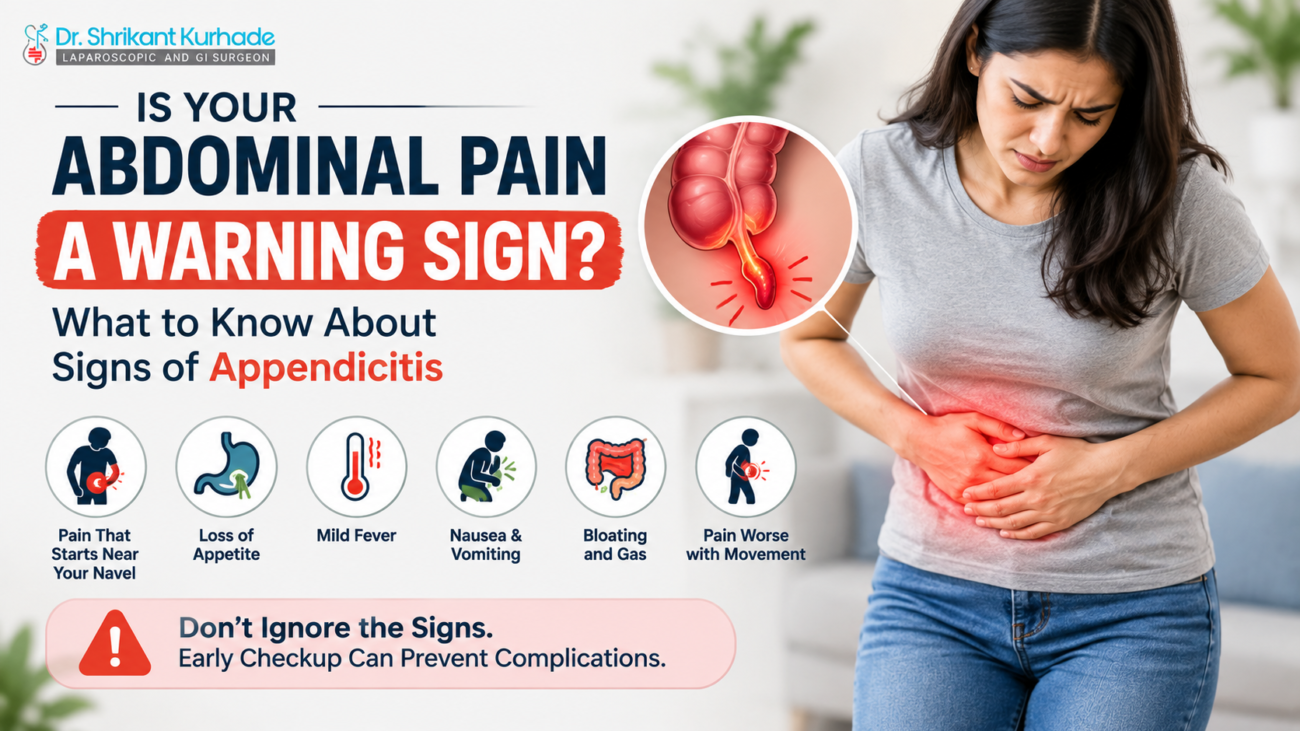
Appendicitis is inflammation of the appendix, a small pouch connected to the large intestine. It can cause abdominal pain that may start near the belly button and later move towards the lower right side of the abdomen.
Recognising the early signs of appendicitis can help you seek medical care promptly. Appendicitis can worsen within hours, and untreated inflammation may lead to complications such as a ruptured appendix, abscess, or peritonitis.
While abdominal pain is the most common symptom, appendicitis can also cause nausea, vomiting, loss of appetite, fever, swelling, constipation, or diarrhoea. Not everyone experiences the same symptoms, especially children and older adults.
What is Appendicitis?
Appendicitis occurs when the appendix becomes inflamed. The appendix is a finger-shaped pouch attached to the large intestine and is located in the lower right area of the abdomen.
The exact cause is not always clear. A blockage inside the appendix can contribute to inflammation. Other possible causes include enlarged tissue associated with infection and inflammatory bowel disease.
Appendicitis can develop suddenly. Symptoms may become more noticeable over several hours, which is why persistent or worsening abdominal pain should not be ignored.
Why Should Appendicitis Never Be Ignored?
Untreated appendicitis can cause the appendix to rupture. A ruptured appendix may allow infection to spread inside the abdomen and can lead to complications such as peritonitis or an abscess.
Early medical evaluation helps doctors determine whether the symptoms are caused by appendicitis or another abdominal condition. Prompt treatment can also reduce the risk of serious complications.
It is important not to wait for symptoms to become severe before seeking medical attention if appendicitis is suspected.
10 Warning Signs of Appendicitis
The following are common appendicitis signs symptoms. They may occur together or individually, and some people may not experience the typical pattern.
1. Pain Around the Belly Button
Appendicitis pain may initially begin around the belly button. It can feel like general abdominal discomfort and may become more noticeable as inflammation progresses.
2. Pain Moving to the Lower Right Abdomen
A common pattern is pain that moves from around the belly button to the lower right side of the abdomen. The pain may become more focused and persistent.
However, pain does not always occur in the same location. Its position can vary depending on the position of the appendix and the individual.
3. Abdominal Pain That Gets Worse
Appendicitis pain may worsen over several hours. Movement, coughing, sneezing, or taking a deep breath may make the pain more noticeable.
Pain that continues to increase rather than improve should be medically assessed.
4. Loss of Appetite
A sudden loss of appetite can occur with appendicitis. It may appear along with abdominal pain, nausea, or vomiting.
Loss of appetite alone does not confirm appendicitis, but it can be relevant when combined with other symptoms.
5. Nausea or Vomiting
Nausea and vomiting may occur with appendicitis. These symptoms can develop alongside abdominal pain and loss of appetite.
Since vomiting can have many causes, it should be considered together with the other symptoms.
6. Fever
A fever may occur with appendicitis, particularly as inflammation or infection develops.
Fever accompanied by worsening abdominal pain requires medical evaluation.
7. Abdominal Swelling
Some people may experience abdominal swelling along with pain and other digestive symptoms.
Swelling by itself does not indicate appendicitis, but it should not be ignored when accompanied by significant abdominal pain.
8. Constipation or Diarrhoea
Appendicitis can sometimes cause bowel changes, including constipation or diarrhoea. Some people may also feel that passing stool could relieve their discomfort.
These symptoms can also occur with other digestive conditions, so medical assessment may be needed.
9. Difficulty Passing Gas
Some people with appendicitis may have difficulty passing gas. This can occur alongside abdominal discomfort or changes in bowel habits.
This symptom alone is not enough to identify appendicitis.
10. Pain That Gets Worse With Movement
Abdominal pain associated with appendicitis may become worse when moving, coughing, sneezing, or taking a deep breath.
Increasing pain with movement, especially when combined with other symptoms, should be assessed promptly.
When Should You Seek Medical Help?
Seek urgent medical attention if you experience abdominal pain that is getting worse, does not go away, or moves towards the lower right side of the abdomen.
You should also seek medical care if abdominal pain occurs with:
- Fever
- Nausea or vomiting
- Loss of appetite
- Abdominal swelling
- Constipation or diarrhoea
- Severe tenderness
- Increasing pain with movement
Do not try to diagnose appendicitis at home. Several other conditions can cause similar abdominal symptoms, including kidney stones, bowel conditions, urinary problems, and some reproductive health conditions.
How Is Appendicitis Treated?
Treatment depends on the severity of appendicitis and whether complications are present.
Appendectomy
An appendectomy is a surgical procedure to remove the appendix. It is the standard treatment for many cases of appendicitis.
The appendix can generally be removed using laparoscopic surgery or open surgery. The appropriate approach depends on the patient’s condition and the surgeon’s assessment.
Medication
Medication may be used as part of treatment. Some mild cases may be treated with antibiotics alone, but this approach is not suitable for everyone. The treatment decision should be made by a doctor after evaluating the patient.
If the appendix has ruptured or an abscess has developed, treatment may require antibiotics, drainage, surgery, or a combination of these approaches.
Considering appendix treatment in pune? Consult Dr. Shrikant Kurhade at KKCare Clinic for an evaluation and personalised treatment plan.
Can Appendicitis Be Prevented?
There is no guaranteed way to prevent appendicitis.
The exact cause is not always known, and appendicitis can occur in people of different ages.
Instead of relying on home remedies or specific foods to prevent the condition, it is more important to recognise concerning symptoms and seek medical care promptly.
Knowing the signs of appendix problems can help you recognise when abdominal pain may need professional evaluation.
Don’t Ignore Persistent Abdominal Pain
Persistent abdominal pain can have many causes, and not every episode of stomach pain means appendicitis. However, pain that becomes worse, moves towards the lower right abdomen, or occurs with fever, nausea, vomiting, or loss of appetite should be assessed by a healthcare professional.
The signs of appendix issues can overlap with symptoms of other abdominal conditions. Doctors may use a physical examination, blood and urine tests, and imaging such as ultrasound, CT, or MRI to determine the cause.
If you are experiencing persistent abdominal pain or symptoms that may indicate appendicitis, timely medical evaluation can help determine the appropriate treatment.
Concerned about possible appendicitis? Speak with a specialist at KKCare Clinic
Persistent or worsening abdominal pain should not be ignored. If you’re concerned about appendicitis, timely evaluation can help identify the cause and determine the appropriate treatment.
Looking for an appendix surgeon in pune? Consult Dr. Shrikant Kurhade at KKCare Clinic for expert evaluation and personalised care.
FAQs
What are the first warning signs of appendicitis?
Common symptoms include abdominal pain, loss of appetite, nausea, vomiting, and fever. Pain may begin around the belly button and move towards the lower right abdomen.
Where does appendicitis pain usually start?
It often starts around the belly button and may later move to the lower right abdomen.
How do I know if my abdominal pain is appendicitis?
You cannot confirm appendicitis from symptoms alone. A doctor may use an examination, blood or urine tests, and imaging to make a diagnosis.
Can children have different symptoms of appendicitis?
Yes. Children may not always have the typical symptoms or may have difficulty describing their pain. Persistent abdominal pain should be evaluated promptly.