
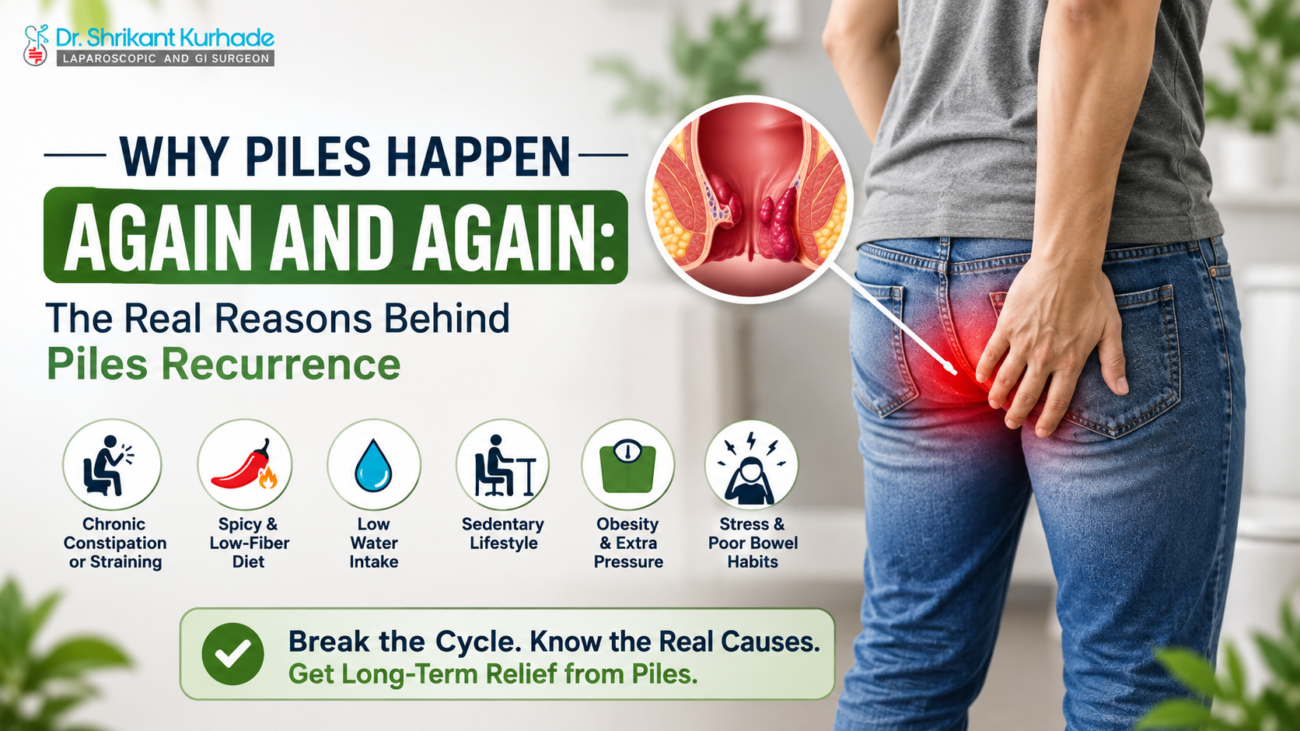
You finally got past the discomfort. The bleeding stopped, the itching faded, maybe you even went through treatment. And then, weeks or months later, the symptoms show up again. If this cycle sounds familiar, you are far from alone. Recurring piles are one of the most common frustrations patients bring up, and the reasons behind it are rarely random.
This article looks at why piles happen again and again, how the causes differ between men and women, whether piles can come back after surgery, and what actually helps break the cycle. This is general information meant to help you understand the pattern better. It is not a substitute for a proper evaluation, so if symptoms keep returning, a piles specialist consultation is the right next step.
What Are Piles and Why Do They Keep Coming Back?
Piles, or hemorrhoids, are swollen veins in the rectal and anal area. Many people assume that once treated, piles are permanently gone. In reality, piles behave more like a condition that needs ongoing management rather than a one time problem with a one time fix.
The tissues and veins involved do not become immune to strain once treated. If the same pressure inducing habits continue, whether that is constipation, prolonged sitting, or repeated straining, the same vulnerable area is likely to swell again. Recurrence is less about the treatment not working and more about the underlying triggers never being addressed in the first place.
The Real Reasons Why Piles Happen Again and Again
Chronic Constipation and Straining
This is the most common recurring trigger. Straining during bowel movements increases pressure on the veins in the rectal area every single time it happens. If constipation is a regular pattern rather than an occasional issue, the cycle of swelling and irritation tends to repeat itself.
Prolonged Sitting and a Sedentary Lifestyle
Long hours at a desk, extended commutes, or simply sitting for stretches without movement all add sustained pressure to the lower rectal area. This is increasingly common among people with desk based jobs, and it is one of the quieter reasons piles tend to resurface even after symptoms have settled.
Poor Bowel Habits
Delaying the urge to pass stool, rushing through it, or spending extended time sitting on the toilet, often while scrolling a phone, all contribute to repeated strain in the same area. These small daily habits add up over time.
Diet and Hydration Gaps
Low fiber intake and inadequate water consumption make stools harder to pass, which directly increases straining. If diet habits do not change after initial treatment, the risk factors that caused the first episode are still present.
Heavy Lifting and Physical Strain
Frequent heavy lifting, whether from gym training or physically demanding work, raises abdominal pressure repeatedly. Over time, this pattern can contribute to renewed swelling in the same veins.
Untreated Underlying Conditions
Ongoing issues like chronic diarrhea or irritable bowel patterns can keep triggering flare ups regardless of how well the piles themselves were treated. Addressing piles without addressing the condition feeding into them often means the cycle continues.
Why Piles Happen in Men
Several patterns show up more often in men when it comes to piles:
- Physically demanding jobs – roles involving heavy lifting, prolonged standing, or manual labor add sustained pressure to the rectal area
- Long hours of driving – truck drivers, delivery professionals, and frequent commuters spend extended periods seated with limited movement
- Heavy weightlifting and training – repeated heavy lifts increase abdominal pressure with each rep
- Smoking and alcohol use – both are commonly associated with digestive patterns that contribute to constipation and straining
- Delayed care seeking – men often wait longer to address symptoms in this area, out of discomfort or hesitation, which allows underlying triggers to continue unaddressed for longer stretches
This combination of physical strain and delayed treatment is a big part of why recurrence is common once symptoms do finally get addressed.
Why Piles Happen in Women
Several factors specific to women’s bodies and life stages play a role in why piles develop and return.
- Pregnancy and childbirth: Increased pelvic pressure, hormonal shifts, and the physical strain of labor make pregnancy and the postpartum period a common window for piles to appear or return.
- Postpartum recovery: Continued straining during early recovery, combined with reduced mobility after delivery, can contribute to symptoms resurfacing.
- Hormonal fluctuations: Changes tied to the menstrual cycle, not just pregnancy, may affect vein elasticity in the rectal area over time.
- Dietary patterns: Inconsistent fiber and water intake, sometimes linked to restrictive eating habits, can quietly raise the risk of constipation and recurrence
- Prolonged standing or sitting: Occupational patterns involving long hours on one’s feet or sitting for extended periods can add to pelvic and rectal pressure over time
Can Piles Come Back After Surgery?
Yes, piles can come back after surgery if the habits and conditions that caused them in the first place are not addressed. Surgery treats the hemorrhoids that already exist. It does not change the daily patterns, such as straining, low fiber intake, or prolonged sitting, that led to their development.
Different procedures carry different recurrence patterns. Conventional surgery, stapler techniques, and laser based procedures each come with their own considerations, and a specialist can walk through which approach fits a particular case. What matters most for the patient afterward is this: recurrence after surgery is not a sign that the procedure failed. It is usually a sign that the contributing lifestyle factors continued unchanged.
How to Stop Hemorrhoids from Coming Back
Prevention comes down to consistency rather than short term fixes.
- Build a fiber rich diet as an ongoing habit, not a temporary one
- Stay adequately hydrated through the day
- Avoid sitting for long, uninterrupted stretches; take short movement breaks
- Respond to the urge to pass stool rather than delaying it
- Avoid spending extended time on the toilet, including phone use while seated
- Favor regular light activity like walking over repeated heavy lifting
- Check in with a specialist periodically, even once symptoms have settled
None of these changes need to be extreme. The goal is reducing the repeated strain that keeps triggering the same area, rather than eliminating any single habit entirely.
When to See a Doctor About Recurring Piles
Some signs point toward needing a proper evaluation rather than continued self management: repeated bleeding, worsening pain, any sign of prolapse, or symptoms returning within a few weeks of treatment. Relying on repeated over the counter creams for a recurring pattern often delays getting to the actual cause.
If piles keep returning despite your best efforts at home, it may be time for a specialist opinion rather than another round of guesswork. Consult a piles specialist in PCMC at KKcare Clinic to get a clear picture of what is driving the recurrence in your case.
Conclusion
Recurring piles are rarely a matter of bad luck. In most cases, the same daily habits that caused the first episode, whether that is straining, prolonged sitting, or inconsistent diet, are still quietly at play. Understanding these patterns is the first step toward breaking the cycle. If you have been through treatment or surgery and symptoms are returning, it does not mean anything went wrong with the procedure. It usually means it is time to look at the habits behind it, ideally with guidance from a specialist who can build a plan around your specific case.
For cases where surgery is being considered, it is worth understanding all available options, including advanced techniques. Dr. Shrikant Khurhade, a robotic surgeon in Pune can walk you through whether a robotic assisted approach is a suitable option for long term management.
FAQs
Why do piles keep coming back after treatment?
Piles often return when the habits that caused them in the first place, such as straining, low fiber intake, or prolonged sitting, continue unchanged. Treatment addresses existing hemorrhoids, not the ongoing lifestyle triggers behind them.
Can piles come back after surgery?
Yes, piles can come back after surgery if underlying causes like constipation or a sedentary routine are not addressed. Recurrence after surgery does not mean the procedure failed; it usually points to unchanged daily habits.
How long after piles surgery can they recur?
Recurrence timing varies from person to person and depends largely on whether contributing habits like straining or a low fiber diet continue. Some cases see symptoms return within months, while others stay symptom free for years.
What lifestyle changes help prevent piles from returning?
Consistent fiber intake, adequate hydration, regular movement, and avoiding prolonged sitting or straining are commonly associated with reduced recurrence. These changes work best as ongoing habits rather than short term fixes.
Is recurring piles a sign of a more serious condition?
Not necessarily, but repeated bleeding, worsening pain, or symptoms returning soon after treatment are worth having evaluated by a specialist rather than managed with repeated home remedies.