
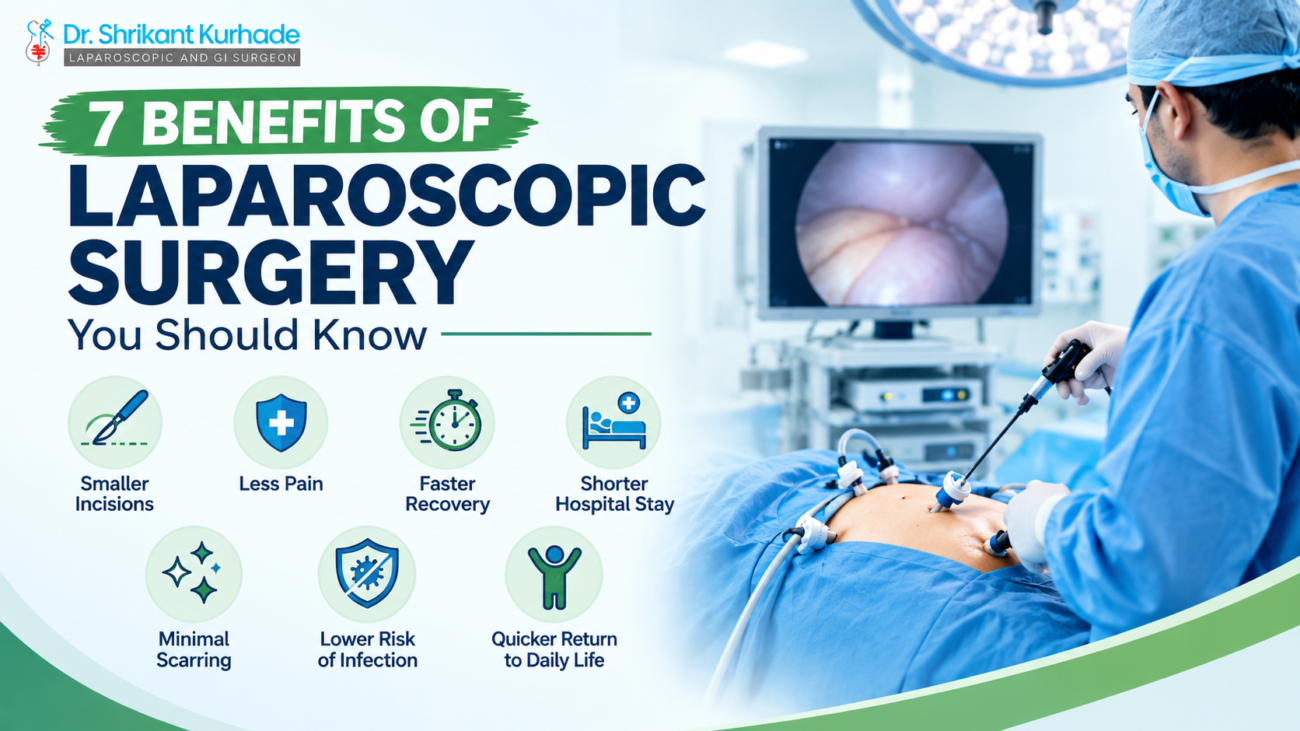
The thought of surgery can feel overwhelming especially when you are concerned about large incisions, pain, visible scars and a lengthy recovery. Fortunately modern surgical techniques have made many procedures less invasive.
Benefits of laparoscopic surgery include smaller incisions, less postoperative pain, reduced blood loss, shorter hospital stays and faster recovery compared to traditional open surgery in many cases. Also known as keyhole surgery laparoscopic surgery uses a camera and specialised instruments to perform operations through small incisions. However outcomes vary depending on the procedure and the patient’s overall health.
What Is Laparoscopic Surgery?
Laparoscopic surgery is a minimally invasive procedure in which a surgeon makes a few small incisions in the abdomen. A thin tube with a camera called a laparoscope is inserted through one incision to view internal organs on a monitor. Specialised instruments are then used through the other incisions to perform the surgery.
Unlike traditional open surgery which requires a larger incision laparoscopic surgery uses smaller cuts potentially reducing tissue disruption and scarring. It is commonly used for gallbladder removal, appendix removal, hernia repair and certain gynaecological procedures.
The surgical technique recovery time and suitability depend on the procedure and the patient’s overall health.
depending on the procedure and the patient’s overall health. Consult your surgeon to understand the most appropriate approach for your condition.
Benefits of Laparoscopic Surgery: Why Is It Preferred?
Laparoscopic surgery is a minimally invasive technique that uses a camera and specialised instruments to perform procedures through small incisions. Key benefits of laparoscopic surgery include:
1. Minimal Surgical Trauma
- Smaller incisions reduce disruption to surrounding tissues.
- Less damage to the surgical site.
- Smaller wounds compared to traditional open surgery.
2. Faster Wound Healing
- Smaller incisions may heal more quickly.
- Less prominent postoperative scars.
- Reduced wound-care requirements in many cases.
3. Reduced Postoperative Pain
- Less tissue disruption may minimise surgical discomfort.
- Reduced need for pain medication in some patients.
- Greater comfort during early recovery.
4. Earlier Return to Daily Activities
- Patients may regain mobility sooner.
- Earlier resumption of routine activities.
- Potentially faster return to work, depending on the procedure.
5. Shorter Hospital Stay
- Many patients can be discharged earlier.
- Some procedures may be performed as day surgeries.
- Reduced hospitalisation can lower overall recovery-related costs.
6. Enhanced Surgical Visualisation
- A magnified camera view provides a detailed look at internal organs.
- High-definition imaging helps surgeons identify anatomical structures.
- Specialised instruments support precise surgical movements.
7. Reduced Recovery Burden
- Smaller wounds may simplify postoperative care.
- Faster recovery can minimise disruption to everyday life.
- Potentially fewer wound-related complications than comparable open procedures.
Is Laparoscopic Surgery Suitable for Everyone?
Although laparoscopic surgery offers several advantages, its suitability depends on individual circumstances.
Factors That Determine Suitability
- Medical History: Existing health conditions and previous abdominal surgeries.
- Surgical Complexity: The type of procedure and extent of treatment required.
- Overall Health: The patient’s ability to undergo anaesthesia and recover from surgery.
- Surgeon’s Assessment: Clinical evaluation and expertise in minimally invasive techniques.
The most appropriate surgical approach should be determined through consultation with an experienced surgeon, considering the potential benefits and risks for each patient.
Common Conditions Treated with Laparoscopic Surgery
Laparoscopic surgery is a keyhole surgical technique used to diagnose and manage a wide range of medical conditions. It is commonly performed for:
- Gallbladder Surgery: Removal of the gallbladder in patients with gallstones or related complications.
- Appendix Surgery: Removal of an inflamed appendix to treat appendicitis.
- Hernia Surgery: Repair of suitable abdominal and groin hernias.
- Weight-Loss Surgery: Procedures such as gastric bypass and sleeve gastrectomy for obesity management.
- Gynaecological Procedures: Hysterectomy and surgical management of endometriosis.
- Urological Procedures: Selected surgeries involving the kidneys and urinary system.
- Colorectal Procedures: Surgical treatment of conditions affecting the colon and rectum.
- Diagnostic Procedures: Examination of abdominal and pelvic organs to investigate unexplained symptoms.
By using small incisions instead of a large surgical opening, laparoscopic procedures may reduce postoperative discomfort, minimise scarring and support quicker recovery. The appropriate approach varies according to the patient’s health, the condition being treated and the surgeon’s assessment.
Is Laparoscopic Surgery Safe?
Laparoscopic surgery is generally considered safe for many routine procedures when performed by an experienced surgeon on an appropriately selected patient. Like any surgery, it carries certain risks, but its minimally invasive approach may reduce wound-related complications, postoperative pain and recovery time compared with open surgery in suitable cases.
The safety of laparoscopic surgery depends on several factors, including:
- Surgeon’s Experience: A surgeon’s training and expertise in minimally invasive techniques play an important role in surgical safety.
- Patient’s Health: Existing medical conditions, previous abdominal surgeries and overall fitness can influence surgical risks.
- Type of Procedure: The complexity and duration of surgery may affect the likelihood of complications.
- Postoperative Care: Proper monitoring, wound care and following medical advice help support a smooth recovery.
Potential complications include bleeding, infection, injury to nearby organs, anaesthesia-related reactions and, occasionally, the need to convert to open surgery.
Overall, laparoscopic surgery is a well-established surgical approach with a favourable safety profile for many procedures. However, it is not risk-free or suitable for everyone. Consulting an experienced surgeon helps patients understand the potential benefits of laparoscopic surgery, risks and most appropriate treatment option for their condition.
Who Is an Ideal Candidate for Laparoscopic Surgery?
Laparoscopic surgery may be suitable for patients requiring procedures such as gallbladder removal, appendix removal hernia repair or certain gynaecological operations.
You may be a suitable candidate if:
- Your condition can be treated effectively through minimally invasive surgery.
- Your overall health allows you to undergo anaesthesia and surgery.
- Your surgeon determines that laparoscopic surgery is appropriate for your condition and medical history.
Patients with previous abdominal surgeries, internal scarring or certain medical conditions may require an alternative approach. Your surgeon will evaluate your health, review relevant test results and discuss the available treatment options before recommending surgery.
Considering Robotic or Keyhole Surgery? Consult a Specialist
If you are considering laparoscopic or robotic surgery consulting an experienced surgeon can help you understand your treatment options. Dr. Shrikant Kurhade a laparoscopic and robotic surgeon at KK Care Clinic holds an MBBS and MS from Grant Medical College and Sir JJ Group of Hospitals Mumbai along with an FNB in Minimal Access Surgery. He has specialised training in laparoscopic and robotic surgery and specialises in gastrointestinal bariatric hernia and robotic surgery.
At KK Care Clinic patients can discuss their diagnosis, surgical options, expected recovery and potential risks. Consult Dr. Shrikant Kurhade to explore whether laparoscopic or robotic surgery is suitable for your condition and make an informed decision about your treatment.
FAQs
1. Is laparoscopic surgery safer than open surgery?
For many suitable procedures laparoscopic surgery may offer less postoperative pain, fewer wound complications and faster recovery than open surgery. However both techniques carry risks and safety depends on the procedure and the patient’s health.
2. How long does recovery from laparoscopic surgery take?
Recovery depends on the type of surgery and the patient’s overall health. Many patients resume light activities within a few days while complete recovery may take several weeks.
3. Is laparoscopic surgery painful?
Some pain soreness or bloating is common after laparoscopic surgery particularly around the incision sites. However many patients experience less postoperative pain than after comparable open surgery.
4. What are the risks and complications of laparoscopic surgery?
Possible risks include bleeding infection, anaesthesia related complications and injury to nearby organs or blood vessels. In some cases the surgeon may need to convert to open surgery for safety.
5. Can all surgeries be performed using laparoscopic or robotic techniques?
No. Some procedures require open surgery due to their complexity, the patient’s medical condition or other factors. Your surgeon can assess your condition and recommend the most suitable surgical approach.