
Piles, also known as hemorrhoids, are swollen veins in and around the rectum or anus. They are a common condition that can affect adults of all ages. While some people may never experience symptoms, others may notice discomfort, itching, pain, or bleeding during bowel movements. In this guide, you’ll learn how to prevent piles,if symptoms have already started, how to avoid piles through everyday precautions, and what to avoid in piles to help minimize irritation.
The good news is that many cases can be prevented or managed by making simple changes to your daily routine. Understanding how piles occur, recognizing the common risk factors, and adopting healthy habits can significantly reduce your chances of developing them.
How Piles Occur
Piles develop when the veins in the lower rectum or around the anus become swollen and inflamed. This swelling can occur internally (inside the rectum) or externally (under the skin around the anus). Increased pressure in this area — often from straining, prolonged sitting, or other lifestyle factors — is usually what causes these veins to enlarge over time, leading to discomfort, irritation, or bleeding in some cases.
Why Do Piles Occur? Common Causes and Risk Factors
Piles usually develop because of repeated pressure on the veins in the lower rectum. Several everyday habits and medical conditions can contribute to this pressure.
Chronic Constipation
Frequent constipation often causes people to strain during bowel movements. Continuous straining increases pressure inside the rectum, making piles more likely.
Sitting on the Toilet for Too Long
Spending extended periods on the toilet, especially while using a mobile phone or reading, places additional stress on the rectal veins.
Low-Fibre Diet
A diet lacking fibre may lead to harder stools, making bowel movements more difficult and increasing the need to strain.
Inadequate Water Intake
Not drinking enough fluids can contribute to harder stools and constipation.
Prolonged Sitting
People who sit for long hours at work or while travelling may experience increased pressure in the pelvic region.
Pregnancy
Hormonal changes and the growing uterus can place additional pressure on pelvic veins, increasing the likelihood of piles.
Heavy Lifting
Regularly lifting heavy weights without proper technique can increase abdominal pressure.
Obesity
Excess body weight places greater pressure on the veins around the rectum.
Ageing
As people grow older, the tissues supporting the veins in the rectum naturally weaken, making piles more common.
Understanding why piles occur helps identify habits that can be modified before symptoms become severe.
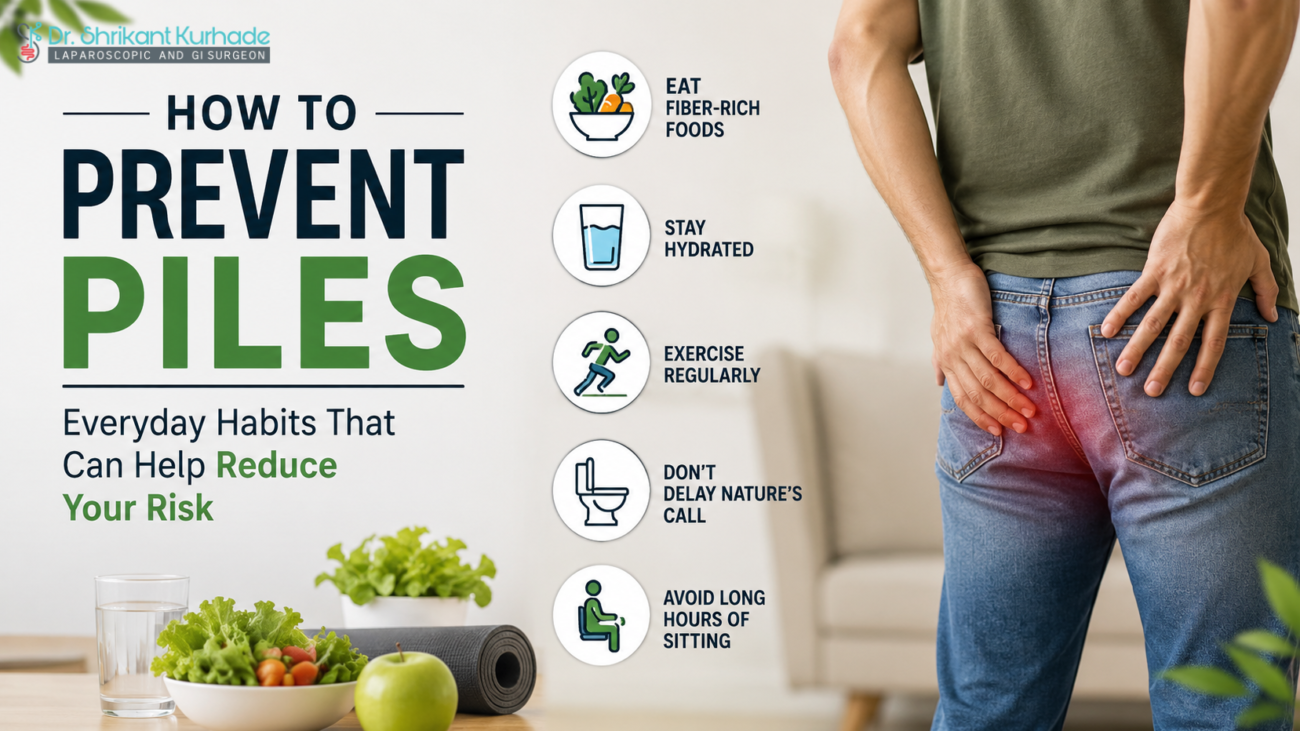
How to Prevent Piles: Everyday Habits That Help
Prevention largely comes down to consistent, everyday habits. Here’s what can help:
Eat a High-Fibre Diet Including plenty of fruits, vegetables, whole grains, and legumes in your diet helps keep stools soft, making bowel movements easier and reducing the need to strain.
Stay Hydrated Drinking enough water throughout the day supports healthy digestion and helps prevent constipation, one of the leading contributors to piles.
Avoid Prolonged Sitting or Straining If your work involves long hours of sitting, try to take short breaks to stand, stretch, or walk around. Avoid spending extended periods on the toilet as well, as this can increase pressure on rectal veins.
Exercise Regularly Light, regular physical activity — even a daily walk — can support healthy digestion and reduce the likelihood of constipation.
Don’t Delay the Urge to Go Postponing bowel movements can lead to harder stools and increased straining later. It’s best to respond to your body’s natural signals promptly.
Maintain a Healthy Body Weight Keeping your weight within a healthy range can help reduce overall pressure on the pelvic and rectal area.
How to Control Piles If Symptoms Have Already Started
If you’re already noticing symptoms, certain habits may help manage mild discomfort:
- Continuing a fibre-rich diet and adequate water intake
- Avoiding straining or sitting for long periods
- Trying warm sitz baths, which many people find soothing
- Wearing loose, comfortable clothing to avoid irritation
That said, these are general management tips only. If symptoms persist, worsen, or involve bleeding, it’s important to consult a doctor rather than relying on home management alone.
How to Avoid Piles: Simple Daily Precautions
Avoiding piles is often about building small, consistent precautions into your daily routine:
- Eat balanced meals rich in fibre.
- Stay hydrated.
- Exercise regularly.
- Avoid sitting continuously for long periods.
- Respond promptly to bowel urges.
- Maintain healthy toilet habits.
- Avoid unnecessary straining.
- Keep physically active.
Small habits maintained consistently often have the greatest impact.
What to Avoid in Piles: Foods and Habits to Watch
Just as some habits help, others can make things worse. If you’re trying to prevent or manage piles, it’s worth being mindful of:
- Low-fibre and heavily processed foods – these can contribute to constipation
- Excessive spicy or oily food – may cause digestive discomfort for some individuals
- Insufficient water intake – a common but often overlooked factor
- Prolonged sitting or standing – both can increase pressure on the rectal area
- Straining or delaying bathroom visits – two of the most direct contributors to piles
- Excessive alcohol or caffeine – best consumed in moderation, as they can affect digestion and hydration
Read more about Foods to Avoid for Piles
When to See a Doctor
While lifestyle habits can help reduce risk and manage mild symptoms, certain signs shouldn’t be ignored persistent bleeding, ongoing pain, a lump near the anus, or symptoms that don’t improve with home care. These warrant a proper medical evaluation rather than self-management.
Consult an Expert at KKCare Clinic
If you’re experiencing persistent symptoms or want expert advice on how to prevent piles, explore treatment options, consult Dr. Shrikant Kurhade, a piles specialist in pune at KKCare Clinic.
Dr. Kurhade specializes in the diagnosis and treatment of piles, robotic surgery and other colorectal conditions using evidence-based approaches. After a thorough evaluation, he recommends a personalized treatment plan based on the severity of your condition, lifestyle, and overall health.
Early consultation can help prevent complications and ensure timely, appropriate care.
FAQs
Can piles be cured permanently with lifestyle changes alone?
For many people, lifestyle changes significantly reduce symptoms and recurrence, but the right approach depends on the severity of the condition — a doctor’s evaluation is recommended for a proper treatment plan.
Is walking good for piles?
Yes, light physical activity like walking is generally considered helpful in supporting healthy digestion and reducing prolonged sitting, a known risk factor.
What foods should be avoided if you have piles?
Low-fibre, heavily processed, and excessively spicy foods are generally best minimised, along with limiting alcohol and caffeine intake.
Do piles go away on their own?
Mild cases may improve with lifestyle changes, but persistent or severe symptoms typically require medical attention rather than resolving on their own.
When should I see a doctor for piles?
If you notice bleeding, persistent pain, or symptoms that don’t improve with home care, it’s advisable to consult a piles specialist promptly.