
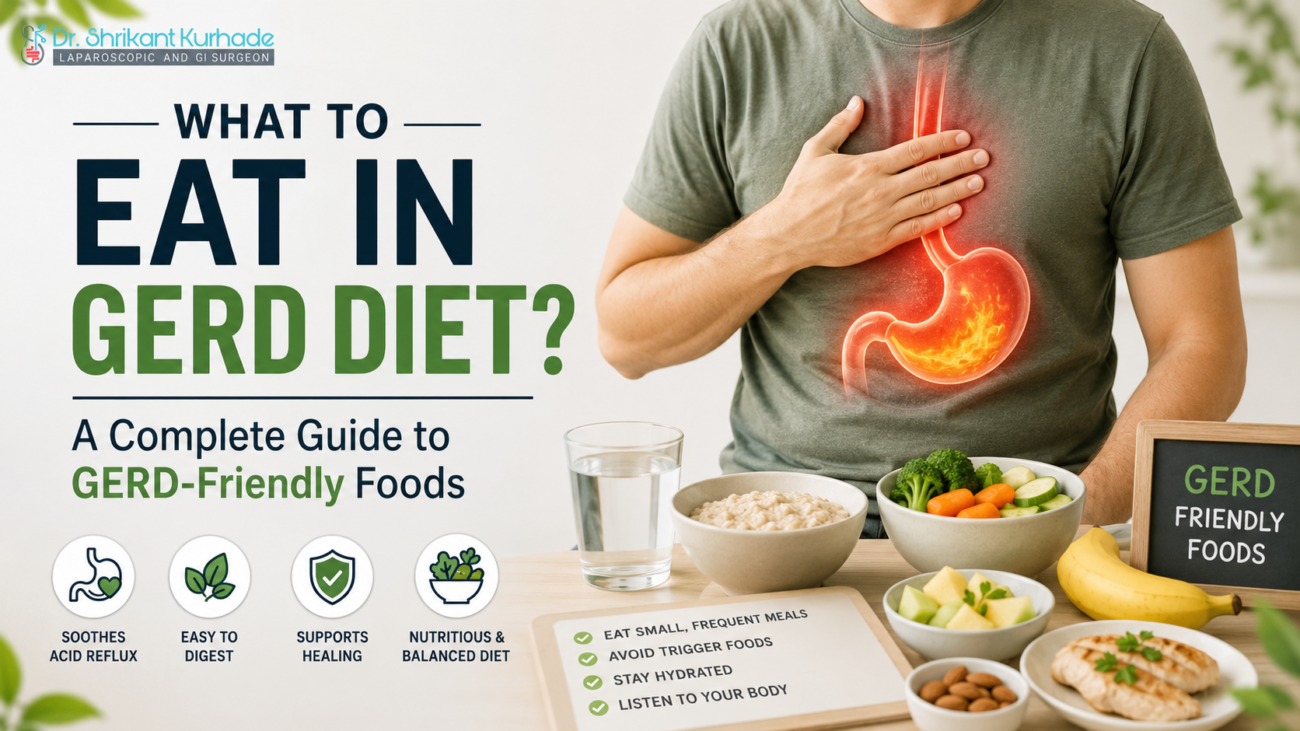
That familiar burning sensation creeping up your chest after a meal, the sour taste at the back of your throat, the discomfort that makes you regret what you just ate, if this sounds familiar, you’re likely dealing with acid reflux or GERD (Gastroesophageal Reflux Disease). And if you’ve been searching for answers, you’ve probably realized that medication alone doesn’t always cut it. What you eat in GERD diet and how you eat it plays a central role in how often and how severely symptoms show up.
This guide covers everything you need to know about a GERD diet: what foods to eat, what to avoid, a quick-reference GERD diet chart, an Indian diet plan tailored to everyday meals, and a sample day plan you can actually follow. This is general informational content meant to help you understand food choices better, it isn’t a substitute for a personalized treatment plan from a doctor.
What is GERD Diet?
GERD, or Gastroesophageal Reflux Disease, happens when stomach acid frequently flows back into the esophagus, causing irritation, heartburn, and discomfort. A GERD diet isn’t a single rigid meal plan, it’s an eating pattern built around foods that are less likely to trigger reflux, combined with habits like eating smaller portions, avoiding late-night meals, and steering clear of specific trigger ingredients.
Unlike a typical weight-loss or fitness diet, a GERD diet is less about calorie counting and more about identifying which foods relax or irritate the lower esophageal sphincter (LES) , the muscle that’s supposed to keep stomach acid where it belongs. Get the eating pattern right, and many people notice a real difference in how often symptoms flare up.
If you’re dealing with frequent or worsening symptoms, it’s worth getting a proper diagnosis. Talk to an acidity specialist doctor at KKCare Clinic to understand what’s really driving your symptoms and get a treatment plan built around your specific case.
How Diet Affects Acid Reflux and GERD Symptoms
The connection between food and acid reflux comes down to a few mechanisms:
- The LES connection: Certain foods and beverages like caffeine, chocolate, and fatty foods that can relax the LES, making it easier for acid to escape upward.
- Acid production: Spicy, acidic, and citrus-heavy foods can increase stomach acidity directly, intensifying the burning sensation.
- Delayed digestion: Fried and high-fat meals sit in the stomach longer, increasing pressure and the likelihood of reflux.
- Meal timing and posture: Eating large meals, eating too close to bedtime, or lying down right after eating all make reflux more likely regardless of what’s on the plate.
- Body weight: Extra abdominal weight puts pressure on the stomach, which can push acid upward more easily.
Understanding these mechanisms helps explain why the same food chart works differently for different people, but the general categories below apply to most GERD patients.
GERD Diet Chart – Foods to Eat and Avoid at a Glance
Here’s a quick-reference GERD diet chart to help you make faster decisions at mealtime.
| Category | Foods to Eat | Foods to Avoid |
| Fruits | Banana, melon, apple, pear | Citrus fruits (orange, lemon), pineapple, tomatoes |
| Vegetables | Leafy greens, cucumber, carrots, green beans | Raw onion, garlic, excess chili peppers |
| Proteins | Lean chicken, fish, tofu, egg whites | Fried meats, fatty cuts, processed/cured meats |
| Grains | Oats, brown rice, whole wheat roti | Refined and fried grain products |
| Dairy | Low-fat yogurt, low-fat milk, buttermilk (in moderation) | Full-fat milk, cream, cheese-heavy dishes |
| Beverages | Herbal tea, plain water, coconut water | Coffee, carbonated drinks, alcohol, citrus juices |
| Fats/Oils | Olive oil, small amounts of avocado | Butter, ghee in excess, deep-fried foods |
| Spices | Ginger, cumin, coriander (mild use) | Red chili powder, black pepper, mint (for some people) |
This chart is a general starting point, GERD triggers can vary from person to person, so tracking your own reactions to specific foods is worth doing alongside this.
GERD-Friendly Foods to Eat (Detailed Breakdown)
Fruits and Vegetables Good for GERD
Non-citrus fruits like bananas, melons, apples, and pears are gentle on the stomach and low in acidity. For vegetables, leafy greens, cucumbers, carrots, and green beans are good picks; they’re low in fat and don’t tend to trigger symptoms the way onions, raw garlic, and tomato-based vegetables can.
Lean Proteins and Healthy Fats
Grilled or steamed lean chicken, fish, tofu, and egg whites are easier on digestion than fried or fatty protein sources. When it comes to fats, small amounts of olive oil or avocado are generally better tolerated than butter, cream, or deep-fried preparations, which can slow digestion and trigger reflux.
Whole Grains and Fiber-Rich Foods
Oats, brown rice, and whole wheat rotis provide fiber, which supports healthy digestion and can reduce the likelihood of reflux episodes. Fiber-rich meals also tend to keep you fuller for longer, which naturally discourages overeating a common reflux trigger.
Best Beverages for Acid Reflux Relief
Plain water, herbal teas (like chamomile), and coconut water are gentle, hydrating options. Steer clear of coffee, carbonated drinks, and alcohol, all of which are known to relax the LES or increase acid production.
Herbs and Natural Remedies
Ginger is commonly used for its soothing effect on the digestive tract. Chamomile tea is another mild option some people find comforting after meals. These are general dietary additions, not medical treatments, so it’s worth discussing with a doctor if you’re looking to use them consistently.
Foods to Avoid With GERD
Certain foods are more likely to trigger symptoms because they relax the LES, increase stomach acidity, or slow digestion. Broadly, these fall into a few categories worth being mindful of.
Acidic Foods to Avoid With GERD
Citrus fruits like oranges, lemons, and grapefruits, along with tomatoes and tomato-based sauces, are among the most common acid reflux triggers due to their high acidity. Vinegar-based dressings and pickled foods can have a similar effect.
Fried, Fatty, and Processed Foods
Deep-fried snacks, fatty cuts of meat, and heavily processed foods slow down digestion, increasing the chances of reflux. These foods also tend to relax the LES, compounding the problem.
Trigger Beverages
Coffee, carbonated soft drinks, and alcohol are frequently reported triggers. Even decaffeinated coffee can be an issue for some people because of its acidity, not just its caffeine content.
Spicy Foods and Strong Seasonings
Chili powder, excess black pepper, and very spicy preparations can irritate the esophagus directly and increase acid production. Some people also find mint, despite its reputation for aiding digestion, actually relaxes the LES and worsens reflux.
Indian Diet Plan for GERD
Indian meals often bring their own set of considerations from oil-heavy curries to spice levels to the ubiquitous cup of chai. Here’s how to adapt everyday Indian eating for GERD:
- Choose steamed over fried: Idli, dhokla, and steamed vegetables are gentler than samosas, pakoras, or other deep-fried snacks.
- Go easy on tempering (tadka): Dal and sabzi made with minimal oil and mild spices are easier to digest than heavily tempered versions loaded with chili and excess ghee.
- Pick roti over fried options: Whole wheat roti or phulka is a better everyday choice than paratha or puri.
- Moderate chai and coffee: Both are common triggers; if you can’t skip chai entirely, keep it light and avoid it on an empty stomach.
- Buttermilk over cream-based dishes: Plain, mildly spiced buttermilk (chaas) is often better tolerated than rich, cream-based curries.
- Watch out for pickles and chutneys: Many Indian pickles and tangy chutneys are both spicy and acidic a double trigger for reflux.
- Simple khichdi is a safe go-to: Especially during flare-ups, a lightly spiced khichdi with vegetables is easy to digest and gentle on the stomach.
Sample GERD Diet Plan (1-Day Meal Chart)
| Meal Time | Food Options |
| Early Morning | Warm water, a small piece of ginger (optional) |
| Breakfast | Vegetable oats or steamed idli with mild sambar (low chili) |
| Mid-Morning | A banana or apple, herbal tea |
| Lunch | Roti, dal (light tempering), steamed vegetables, cucumber salad |
| Evening Snack | Roasted makhana or a handful of soaked almonds |
| Dinner | Khichdi or brown rice with vegetables, light on spices |
| Before Bed | Warm (non-citrus) herbal tea, at least 2–3 hours before sleeping |
Keep portions moderate at each meal, and avoid eating within 2–3 hours of lying down.
Additional Lifestyle Tips to Support Your GERD Diet
Diet works best alongside a few supporting habits:
- Eat smaller, more frequent meals instead of large ones that overload the stomach
- Avoid lying down for 2–3 hours after eating to give digestion time before gravity stops helping
- Elevate your head while sleeping to reduce nighttime reflux
- Maintain a healthy body weight, since excess abdominal pressure worsens symptoms
- Chew food slowly and avoid overeating, which reduces pressure on the LES
- Avoid tight clothing around the waist, which can also increase abdominal pressure
These are general lifestyle habits associated with reflux management not directives, and results vary from person to person.
Best Diet for GERD – Key Takeaways
There’s no single universal “best diet for GERD”, but most effective approaches share common principles: low-fat, low-acid, high-fiber meals, eaten in moderate portions and spaced out throughout the day. Non-citrus fruits, lean proteins, whole grains, and mild seasoning form the foundation, while fried foods, excess caffeine, alcohol, and acidic ingredients are best minimized.
Since triggers can vary from person to person, keeping a simple food diary, noting what you ate and when symptoms appeared, can help you identify your personal patterns over time, alongside the general chart above.
Frequently Asked Questions
What is the best diet for GERD?
The best diet for GERD generally includes low-fat, low-acid, high-fiber foods like lean proteins, non-citrus fruits, whole grains, and vegetables, while limiting fried foods, caffeine, alcohol, and spicy or acidic ingredients.
What foods should be avoided completely with GERD?
Common trigger foods include citrus fruits, tomatoes, fried and fatty foods, caffeine, carbonated drinks, alcohol, and heavily spiced dishes. However, individual triggers can vary, so tracking personal reactions is useful.
Can I eat rice and roti if I have GERD?
Yes. Whole wheat roti and rice (especially brown rice) are generally well tolerated and considered safer staple choices compared to fried grain products like puri or paratha.
Is curd/yogurt good for GERD patients?
Low-fat yogurt is often well tolerated and can be soothing for some people, though reactions vary. Full-fat dairy and cream-based products are more likely to trigger symptoms.
What is a good Indian breakfast for acid reflux?
Steamed options like idli or dhokla, or a bowl of vegetable oats, are gentle choices. Avoiding fried breakfast items and strong chai on an empty stomach can also help reduce morning symptoms.
How long does it take for a GERD diet to show results?
This varies by individual, but many people notice reduced symptom frequency within a few weeks of consistent dietary changes, especially when combined with lifestyle adjustments like smaller meals and avoiding late-night eating.
Can drinking water help with acid reflux?
Staying hydrated with plain water throughout the day can support digestion. However, drinking large amounts of water right after a meal may increase stomach volume and pressure, so spacing it out is generally recommended.
Conclusion
Managing GERD through diet isn’t about eliminating everything you enjoy, It’s about understanding which foods tend to trigger symptoms and building consistent eating habits around that. Use the GERD diet chart above as your starting reference, experiment mindfully with the Indian meal suggestions, and pay attention to how your body responds over time.
That said, persistent or worsening acid reflux shouldn’t be managed through diet alone. If symptoms continue despite dietary changes, it’s worth getting a proper evaluation. Consult an acidity specialist in pimpri chinchwad at KK Care Clinic for a personalized diagnosis and treatment plan suited to your specific condition.